The clock is horizontal
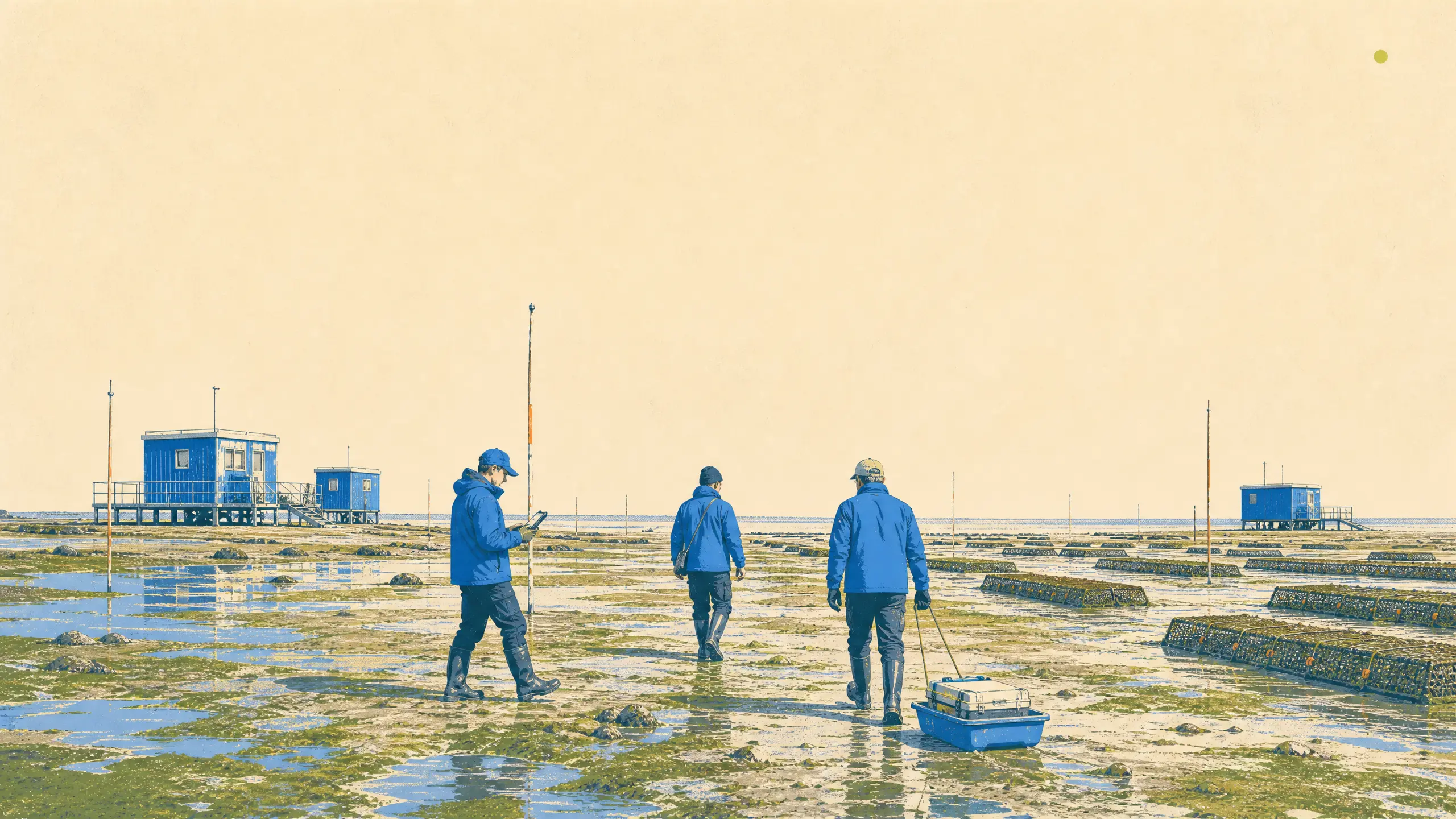
Low Tide Protocol takes place across a chain of research platforms that become reachable twice each day. The sea withdraws, opening footpaths through mud, rock pools and shellfish beds. Six in-game hours later, those paths disappear. Nothing attacks you. The central threat is distance combined with a plan that assumed too much.
Each expedition begins at a wall map. You choose instruments, cable, food, sample boxes and a route. Equipment has volume rather than abstract weight, so a long antenna case changes what else fits on the sled. The first lesson is simple: carrying everything is another way to be unprepared.
Useful forecasts, imperfect ground
Tide tables are accurate, but the exposed landscape changes. Channels migrate after storms. A path marked firm may be soft. Birds can close a sampling zone for a morning. These variations never feel random because the station records explain why they occur and which signs to watch.
The game distinguishes uncertainty from ignorance. You can measure depth, ask another station for a recent crossing report or leave a marker for tomorrow. Good play means spending time to reduce one risk while accepting another. That structure turns preparation into active decision-making.
A crew of practical voices
Your colleagues speak through short radio exchanges. They are concerned with sample contamination, shared batteries, missing gloves and whether the kettle was switched off. Their personalities emerge through priorities rather than biography dumps. The ornithologist always notices access routes that avoid nests. The engineer thinks in return journeys. The intern records everything and gradually learns what not to write down.
Because the station operates as a team, success changes future conditions. A well-placed sensor improves forecasts for everyone. An abandoned case may be recovered by another crew and unavailable when they need it. The simulation makes cooperation visible without turning it into a social meter.
Repetition at the waterline
The campaign's middle third asks for too many similar calibration trips. The landscape changes, but connecting the same three cable types loses interest before new instruments arrive. A limited fast-forward option helps at the station but not on familiar walks across the flats.
The broader design remains compelling. Low Tide Protocol understands that survival can mean competence rather than desperation. Its tension comes from a changing coast, finite daylight and the knowledge that a forgotten connector is waiting several kilometres behind you. Few games make preparation feel so physical — or a successful return journey feel so complete.
The tide creates tension without malice. It does not chase you. It simply makes your earlier decisions arrive all at once.