A basin instead of a board
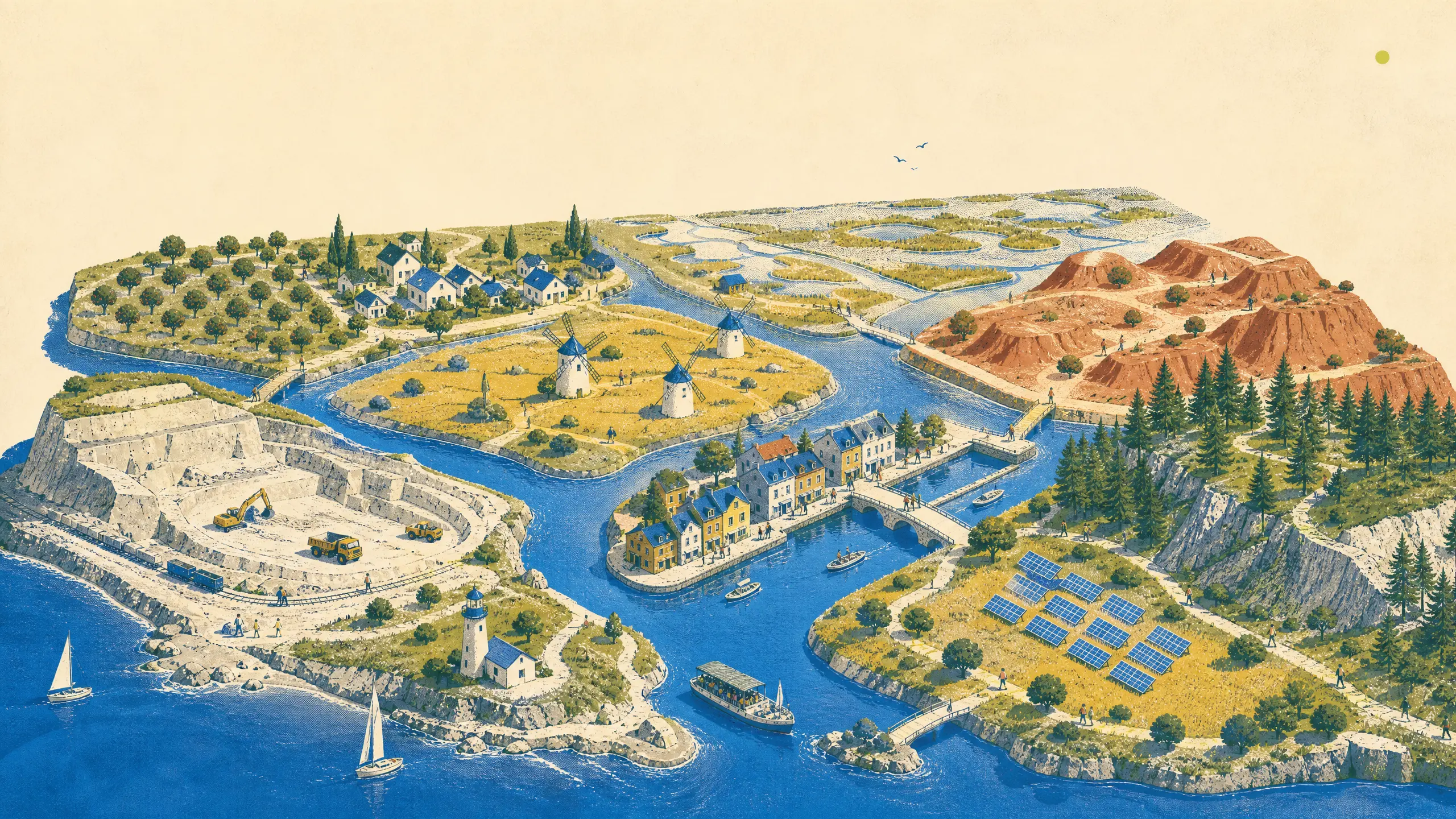
Nine Small Kingdoms fits its entire campaign on one river basin. The territories are barely a screen wide: an orchard commune upstream, a quarry ridge, a canal town, salt marshes and a lighthouse coast among them. There is no fog of war and no empty frontier. Every usable space already means something to somebody.
You manage one territory, but the simulation tracks all nine with equal seriousness. Expanding irrigation changes downstream salinity. Opening a quarry lowers construction costs across the basin while increasing silt. A ferry route can make a neighbouring market more successful than your own. Growth is never isolated.
Agreements with memory
Diplomacy uses short written agreements rather than attitude meters. A kingdom can promise six weeks of water access, seasonal labour or priority at a bridge. The interface records not only whether you kept the terms but how difficult they became to keep. Breaking a promise during drought carries a different memory from breaking one during abundance.
This makes trust feel material. Neighbours are not personalities waiting to be pleased with gifts. They are small governments managing specific pressures. A deal works when it leaves both parties with a story they can defend to their citizens.
Prosperity as circulation
The economy rewards movement. Goods improve when they cross borders: orchard fruit becomes preserves in the canal town, quarry stone becomes sea walls on the coast, marsh reeds become insulation in the hills. Hoarding produces secure numbers but a brittle basin. Trade creates efficiency and dependence at the same time.
The game's most interesting disasters are therefore political. A washed-out bridge does not simply reduce income. It strands the shared process that made three territories viable. Recovery may require reopening an old road through land you spent years protecting.
The unreadable council
Most systems explain themselves with exemplary clarity. The late Basin Council is an exception. Major proposals appear after hidden combinations of reputation, infrastructure and seasonal stress. You can understand the vote once it exists, but planning for a specific reform is difficult without external notes.
The opacity is frustrating because the rest of the game demonstrates how good transparency can be. Even so, Nine Small Kingdoms is a remarkable strategic model. It replaces the fantasy of endless expansion with something more demanding: the work of becoming useful to a place that was already connected before you arrived.
The river is not a resource bar. It is the place where every local success becomes somebody else’s new condition.